

Privatizing Public Health: How the Finance Sector Crippled Rhode Island’s Hospitals
By: Eshaan Vakil

Rhode Island Attorney General Peter Neronha found himself caught between a rock and a hard place. In a November 4th interview, he attempted to allay public fear, saying “I understand people are concerned, but we’re not at the tipping point.” Privately, however, he knew the situation was far more urgent. “Time is running out,” he wrote in an alarming November 10th email. Indeed, time has since run out for Rhode Island’s public health system and two of the hospitals that anchor it, placing the lives of thousands of Rhode Islanders at risk.
Our Lady of Fatima Hospital and Roger Williams Medical Center are Rhode Island’s third- and sixth-largest hospitals, respectively, by staffed beds. They have been mired in intense bankruptcy proceedings since their owner, Prospect Medical Holdings, defaulted in January 2025. The state has struggled to find buyers for the hospitals and their fate is in jeopardy, raising questions about the private equity ownership and privatization that brought Rhode Island’s medical system to the brink.
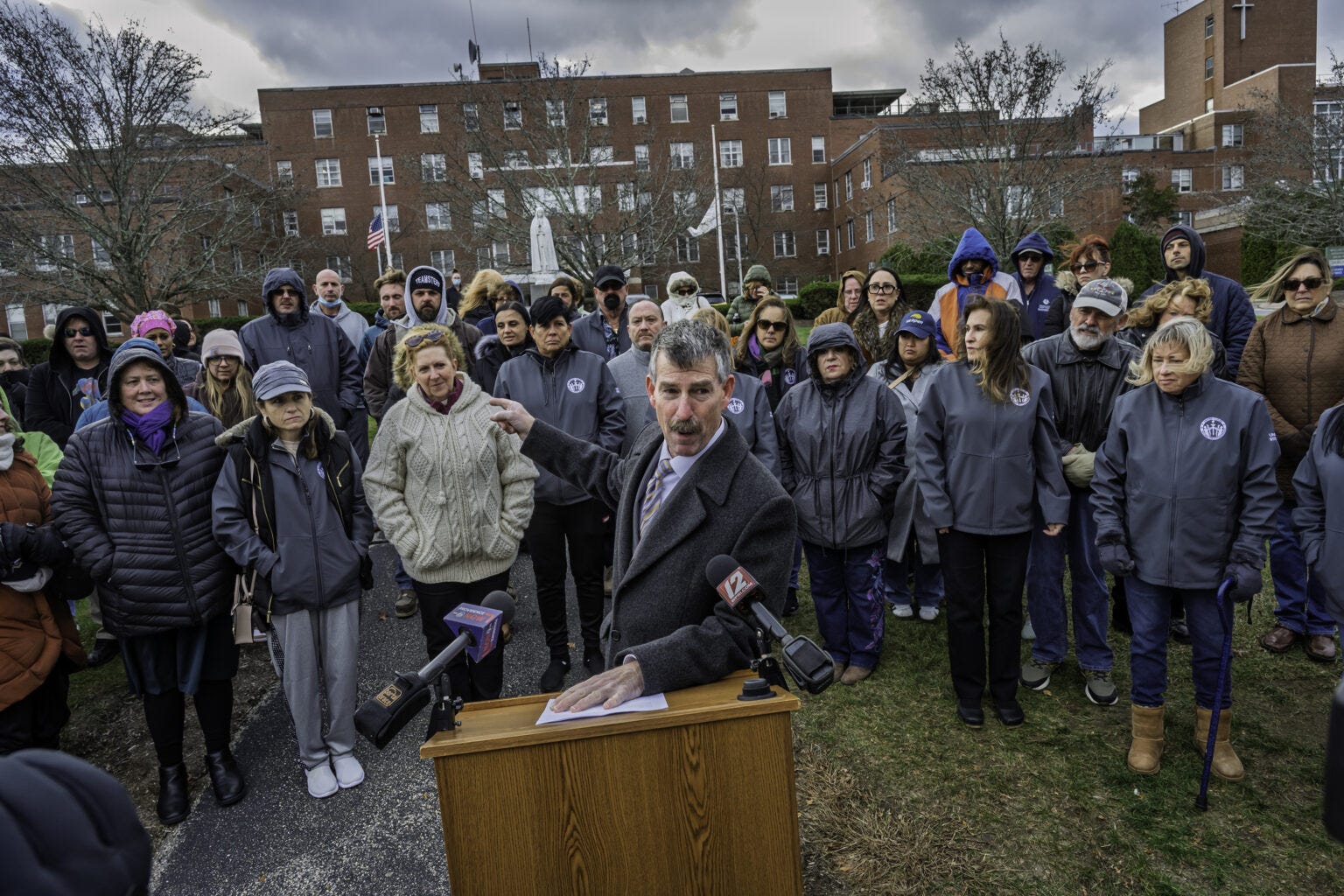
The state’s health system has long been on its last legs. Rhode Island’s hospital occupancy rate is a shocking ninety percent, the highest in the nation. This means that, at any given moment, only ten percent of hospital beds are available to receive new patients. That has cascading effects down the line, as patients are forced to wait longer to see a doctor and the ability of the system to handle disasters is severely compromised.
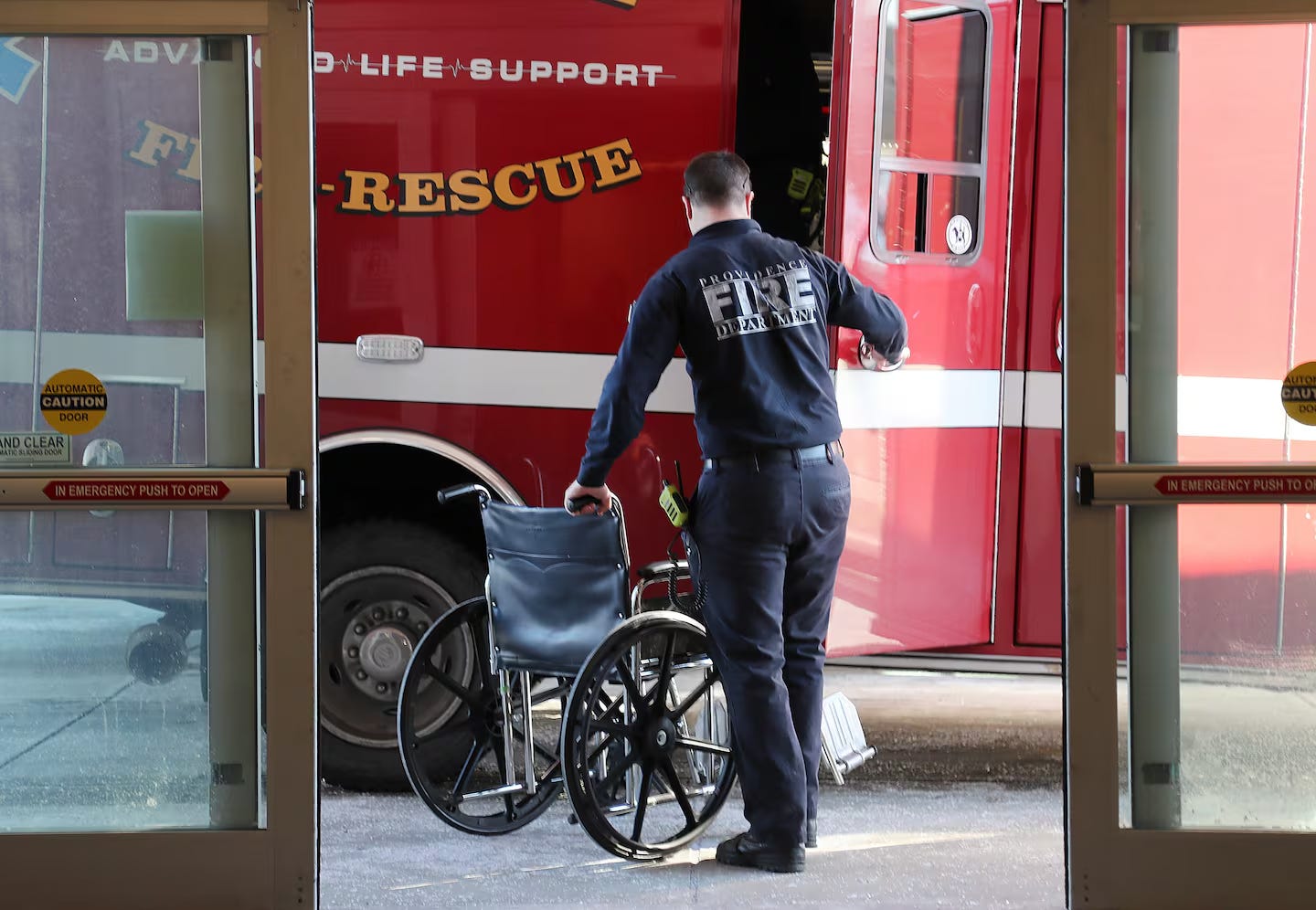
Williams and Fatima are two of the state medical system’s most essential supports. As some of Rhode Island’s largest hospitals, they serve thousands of people in their catchment areas, many of whom would find themselves without affordable medical care otherwise. The two hospitals handle more than fifty thousand emergency room visits each year.
“About half of them are Medicaid patients,” Amy Nunn, the CEO of the Rhode Island Public Health Institute, told The Beacon. “A lot of them are just middle class folks who go to the hospital near where they live.” The two also provide some of the largest behavioral health units in Rhode Island, vital for a state experiencing a crisis of mental health care.
Selling Off Rhode Island’s Healthcare
The two hospitals have been owned by the same entity since at least 2009, but Williams and Fatima first came into the hands of Prospect Medical Holdings, a private equity-owned healthcare company, in 2014, converting both from non-profit to for-profit institutions.
Prospect’s ownership was initially welcomed by many in the state who hoped that the California-based medical services conglomerate would inject cash into the struggling hospitals. And for a while, it did — Prospect invested more than $100 million in the facilities over the first four years. After that, though, the cracks in Prospect’s bottom line began to show.
In 2018 and 2019, Leonard Green & Partners, the private equity owner of Prospect Medical, ordered the company to engage in two risky financial maneuvers. First, Prospect was forced to take a $1.1 billion loan to pay Leonard Green’s executives and shareholders a $457 million dollar dividend — money that otherwise would have gone toward the hospitals’ operational costs.
Then, Leonard Green sold Prospect’s hospitals to a real estate speculator and leased use of the hospitals back, wiping out Prospect’s assets and putting it on the hook for more than one million dollars in rent annually. This tactic, known as a “sale-leaseback agreement,” is extremely common for private equity firms and has led to the criticism that these firms strip the companies they acquire for parts.
Finally, Leonard Green cut Prospect loose, selling it to other investors.
Overnight, Prospect’s financial outlook was transformed. While it was on shaky ground for years, it was solvent before the involvement of private equity funds and the shift toward profit extraction. After, Prospect became a house of cards liable to be toppled by any strong gust of financial wind, taking the hospitals down with it.
The company’s hospitals around the country could no longer pay for needed elevator repairs or for gasoline to run ambulances. At Williams and Fatima, staff found themselves suddenly unable to perform life-saving heart surgeries as they waited for stents and implants that had not yet been paid for. Surgeons frantically called Prospect’s corporate headquarters in California, only for no one to pick up. Water began to leak into operating rooms and laboratories, where staff had to set up buckets and absorbent pads to prevent water leaking on electrical fixtures and literally turning the lights out.
In spite of the hospitals’ seeming inability to function, they continued performing lucrative elective procedures, like plastic surgery, while turning patients away from the emergency room at the height of the COVID-19 pandemic. The CEO of Williams told federal inspectors that he sometimes received only half the money required to run the hospital and had no idea how much he would get ahead of time — a marked change from a few years ago, he said.
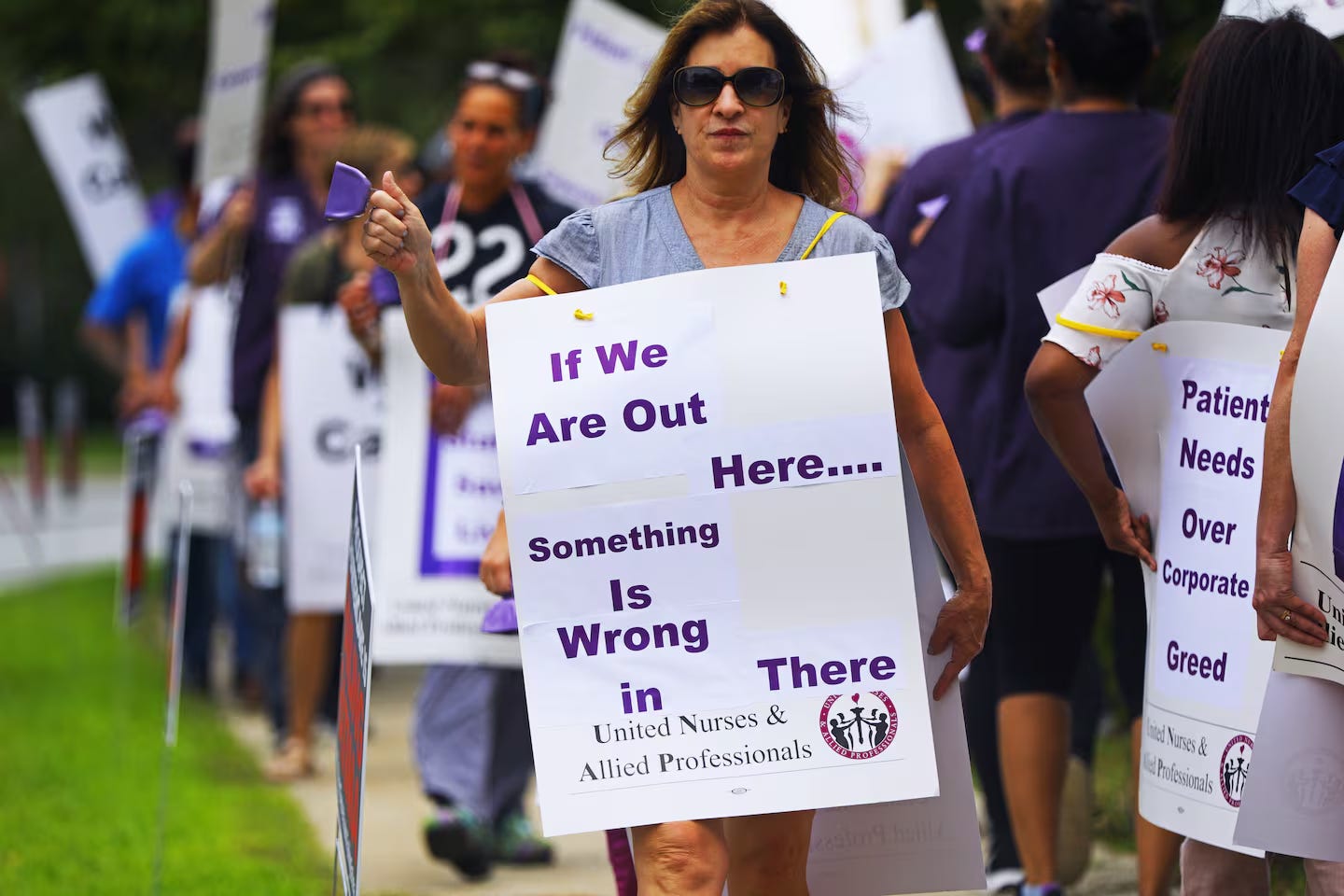
In January of 2025, the house of cards finally collapsed, and Prospect filed for bankruptcy. Bankruptcy court filings reveal a house rotted down to its foundations; Prospect owed the state of Connecticut alone more than $127 million in unpaid taxes. While Rhode Island’s Division of Taxation remains tight-lipped about possible taxes owed by Prospect, it emerged in court that Williams and Fatima were net money-losers with balance sheets deep in the red.
Since the bankruptcy, Rhode Island Attorney General Peter Neronha has been frantically attempting to find buyers for the ailing hospitals and prevent the state’s healthcare system from collapse. The Centurion Foundation, a Georgia-based non-profit, secured approval from the state but has not yet acquired the money to purchase the hospitals, leading to recriminations between Centurion CEO Ben Mingle and Neronha.
What Comes After Private Equity
This is not the first time private equity has taken down a New England state’s healthcare system. In 2024, Steward Healthcare collapsed in Massachusetts after its CEO and private equity investors extracted hundreds of millions in what the chain later labelled “greed and bad faith misconduct” in bankruptcy court filings. In fact, Massachusetts passed a law in early 2025 to address this crisis, imposing stricter oversight on private equity-owned hospitals and prohibiting sale-leaseback agreements for hospitals — like the one that saddled Prospect with millions of dollars of debt.
Thousands lost their jobs, and hospitals around the state struggled to cope. Many nurses and staff found new jobs in other hospitals, like Williams and Fatima.
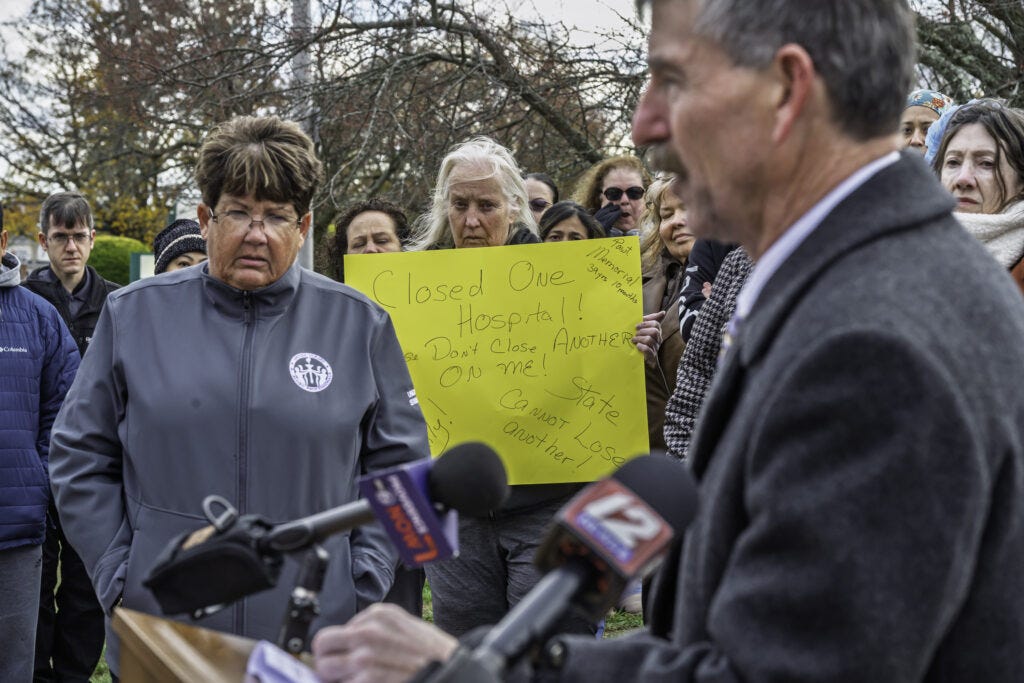
But Rhode Islanders fear what happened across the border is now happening in their state. “We’ve seen what happened with Steward is that people who are already underserved are the ones who bear the brunt of the challenge,” Nunn, the Rhode Island Public Health Institute CEO, says.
Now that private equity has extricated itself from the situation, the state has been left holding the bag: two battered hospitals that it is struggling to keep open. The Rhode Island Attorney General has secured funding for the hospitals to operate through the month of January, but their fate afterward remains uncertain.
As Nunn lays out the stakes, “the hospitals are too big to fail. The situation requires the state and a healthcare organization holding hands to find a solution… It’s hard to be prescriptive about what that will look like, but the first is the commitment, and that will require significant resources.”
Eshaan Vakil is the Co-Editor-in-Chief of The New England Beacon. To contact them with tips and information, please email here. To support our mission, please click here.
Incisive reporting on how private equity systematically devistates essential services. The sale-leaseback stratagy you documented is basically just a wealth extraction machine that leaves communities holding an empty shell. I dunno if most people realize how common this pattern is across different sectors where PE firms load companies with debt just to pay themselves dividends. Really makes you think about whether healthcare should ever be run for profit when it's such a fundamental public good.
Same thing happening in CT with Prospect Holdings. Our medical infrastructure is too important to hand over to capitalists that serve profit over the health of our people.